If you spend enough time around Lake Wallenpaupack and the surrounding Pocono Mountains, chances are you’ll eventually cross paths with a snake. For many, that moment sparks curiosity—or concern. The good news? The vast majority of snakes in Northeastern Pennsylvania are completely harmless. In fact, they play an important role in controlling pests and maintaining a healthy ecosystem. This guide breaks down the most common non-venomous snakes, the two venomous species you should be aware of, where you’re likely to encounter them, and—importantly—what to do if you ever get bitten.
Where Snakes Live Around Lake Wallenpaupack
The Wallenpaupack region offers ideal snake habitat:
- Wooded hillsides and forests
- Rocky outcroppings and ledges
- Wetlands, streams, and lake edges
- Fields, gardens, and stone walls
Snakes are most active from April through October, especially during warm, sunny mornings and late afternoons.
Common Non-Venomous Snakes You’ll See
These species make up the overwhelming majority of snake sightings in the region.
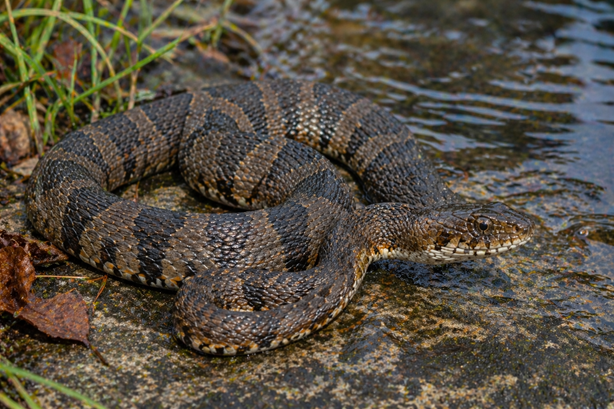
Northern Water Snake
Where: Lake edges, docks, rocks, and streams
Look: Thick body, brown/gray with dark bands
Behavior: Often mistaken for something dangerous
Bite: Can bite if handled, but not harmful beyond minor injury
One of the most frequently seen snakes around Lake Wallenpaupack.
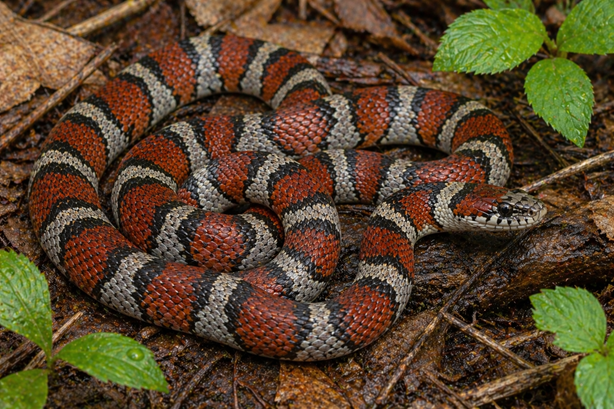
Eastern Milksnake
Where: Barns, basements, rural properties
Look: Gray with reddish blotches
Behavior: Secretive, often confused with copperheads
Bite: Harmless
Excellent for controlling rodents.
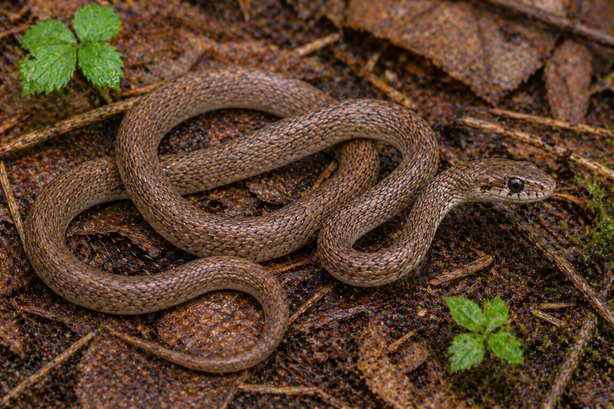
Dekay’s Brownsnake
Where: Gardens, under rocks and mulch
Look: Small, brown with subtle markings
Behavior: Very docile
Bite: Extremely unlikely
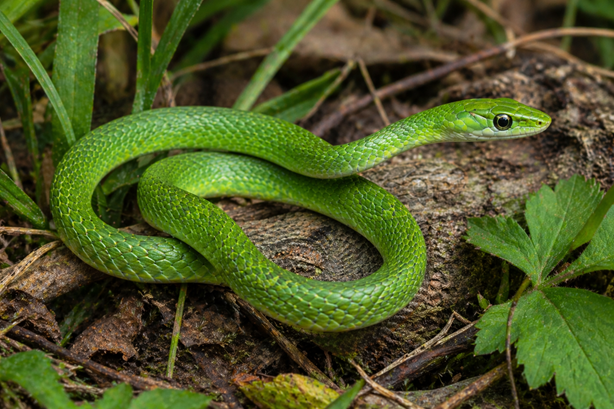
Smooth Greensnake
Where: Grassy fields and meadows
Look: Bright green, blends into vegetation
Behavior: Shy and delicate
Bite: Harmless
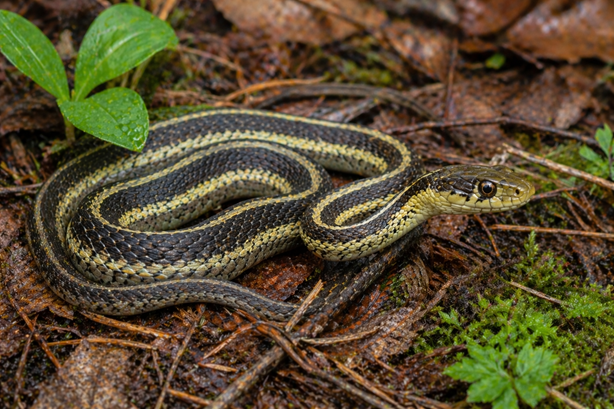
Eastern Garter Snake
Where: Lawns, gardens, wooded edges
Look: Slender with yellow or green stripes
Behavior: Quick, non-aggressive
Bite: Rare and harmless
Likely the most common snake in the region.
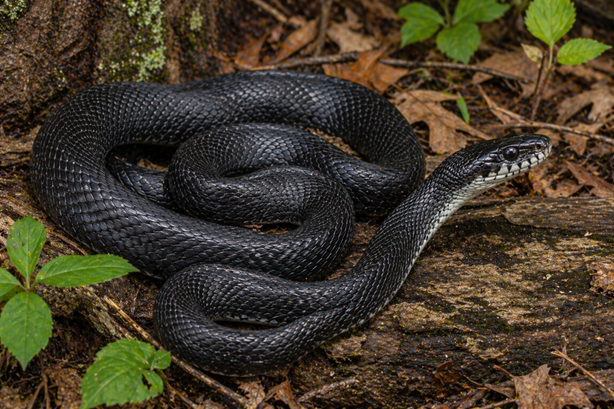
Eastern Ratsnake (Black Rat Snake)
Where: Trees, barns, wooded areas
Look: Large, black, can exceed 5 feet
Behavior: Strong climber, non-aggressive
Bite: Intimidating size, but harmless
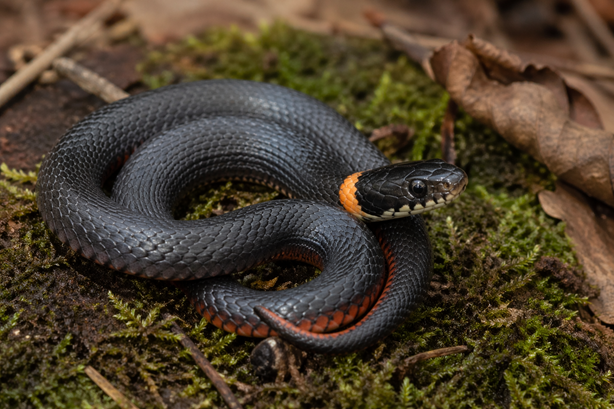
Ring-necked Snake
Where: Forest floors, under logs
Look: Dark body with bright neck ring
Behavior: Secretive, rarely seen
Bite: No concern
Venomous Snakes in Northeastern PA
While rare, there are two species you should be aware of.
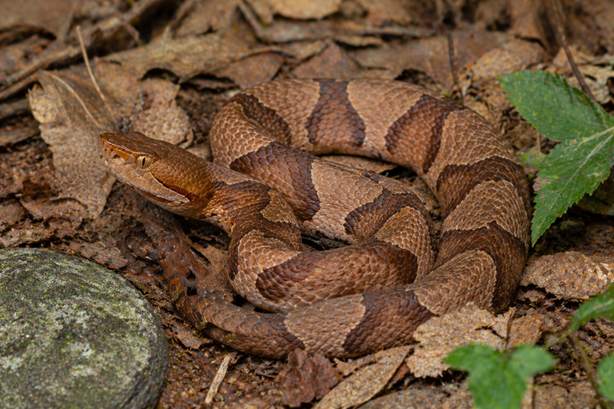
Eastern Copperhead
Where: Rocky hillsides, wooded areas, leaf litter
Look: Tan/copper color with hourglass-shaped bands
Camouflage: Excellent—often blends perfectly with fallen leaves
Bite Details:
- Venom strength: Moderate
- Fatalities: Extremely rare
- Symptoms: Pain, swelling, tissue damage
Most bites occur when someone accidentally steps near or on one.
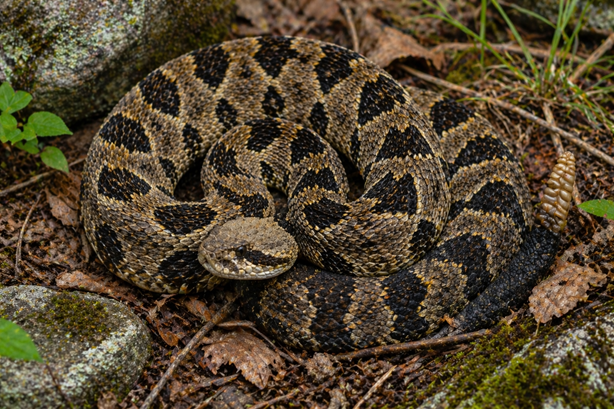
Timber Rattlesnake
Where: Remote forests, rocky ridges, sunlit ledges
Look: Large, heavy-bodied with dark bands and a rattle
Behavior: Generally avoids people
Bite Details:
- Venom strength: Potent
- Warning system: Rattle gives clear alert
- Symptoms: Severe pain, swelling, possible systemic effects
Sightings are uncommon near high-traffic areas but possible in more remote sections of the Poconos.
Bite Power & Risk Comparison
| Snake Type | Bite Risk | Severity |
| Non-venomous | Low | Minor (like a scratch) |
| Copperhead | Low | Moderate (rarely life-threatening) |
| Timber Rattlesnake | Very Low | Serious if untreated |
Key takeaway: You are far more likely to see a harmless snake than a dangerous one.
What To Do If You’re Bitten
If it’s a non-venomous snake: wash with soap and water. apply antiseptic, and monitor for infection
If you suspect a venomous bite: act quickly—but stay calm.
DO:
- Call 911 immediately
- Keep the affected limb still and below heart level
- Remove jewelry or tight clothing
- Try to remember the snake’s appearance (do NOT attempt to capture it)
DO NOT:
- Do not apply ice
- Do not cut the wound
- Do not try to suck out venom
- Do not use a tourniquet
Medical Centers Near Lake Wallenpaupack
If you’re in the Wallenpaupack area, these facilities are your best options:
Wayne Memorial Hospital (Honesdale, PA)
- Closest full-service hospital to the lake
- Emergency department equipped for snakebite treatment
Geisinger Community Medical Center (Scranton, PA)
- Larger regional hospital
- Advanced emergency care
Another strong option depending on your location is Lehigh Valley Hospital–Pocono (East Stroudsburg, PA)
In all cases: Call 911 first so EMS can begin treatment immediately!
Snake Safety Tips for the Poconos
- Watch where you step—especially in rocky or wooded areas
- Avoid reaching into brush piles or under logs
- Wear boots when hiking
- Keep yards clear of debris if you want to reduce encounters
- Never try to handle or kill a snake
Final Thought
Snakes are an important part of the Lake Wallenpaupack ecosystem, helping control rodents and insects while rarely posing a threat to humans. Most encounters are brief, harmless, and avoidable. With a little awareness, you can safely enjoy everything the Poconos has to offer—including the wildlife that calls it home.